Roof Leak Cleanup in River Edge
Rain entering overhead can leave a wet path far from the roof opening. River Edge interior cleanup follows that path through decking, framing, insulation and finishes once safe access is established.
(888) 471-9821Describe rain entering the houseHow roof leak water damage is handled in River Edge
Roof leak restoration treats the building materials affected after rain passes the exterior barrier. Roof repair controls entry; interior assessment determines which wet layers can remain and where access is needed for effective drying.
First steps for roof leak water damage
- 1
Leave roof access to specialists
Do not climb onto a wet roof to inspect the opening. Describe the interior signs and arrange suitable roof attention while keeping people away from unstable materials below.
- 2
Limit use beneath wet ceilings
Set a clear boundary around sagging finishes or dripping electrical fixtures. Collecting water should never require standing in a space where overhead material may release unexpectedly.
- 3
Record the rainfall connection
Note when staining or dripping changes and which room shows it first. Photos taken safely indoors help connect the visible damage with the roof investigation and cleanup scope.
- 4
Explain available attic entry
Mention the access hatch, stored belongings and any known wet insulation. This information helps plan inspection without relying on unsafe movement across the concealed ceiling structure.
What does roof leak water damage cost in River Edge, NJ?
River Edge roof leak cleanup planning ranges from $1,000 to $2,200 for a contained ceiling leak, $2,200 to $4,300 when attic and ceiling are wet, and $4,300 to $6,500+ for multiple affected rooms.
Contained ceiling leak
- Small interior footprint
- Reachable overhead assessment
- Limited finish treatment
Attic and ceiling wet
- Insulation condition decisions
- Framing moisture checks
- Connected cavity drying
Multiple rooms affected
- Broader rainwater path
- Several interior openings
- Expanded progress documentation
Compare the scope with the water damage cost calculator. The restoration company prices the inspected damage, material access and equipment needs separately from source repairs, replacement finishes and contents work.
The roof leak water damage process
- 1
Connect the roof findings with indoor damage
The initial scope uses interior observations and information from the roof work to identify the affected route. Ceiling stability, attic access and electrical concerns determine where inspection can proceed safely and which materials need closer assessment.
- 2
Expose layers that obstruct cleanup
Damaged finishes and wet insulation are evaluated for removal where they block inspection or drying. The work should reveal useful access to retained framing while controlling loose material and protecting the usable rooms beneath the affected area.
- 3
Track the drying response through the assembly
Air movement reaches accessible wet surfaces while dehumidification removes released moisture. Repeated material readings show whether the roof-related cavities are improving, and persistent dampness prompts checks for renewed entry or inaccessible layers holding water.
- 4
Describe the interior repair endpoint
Once the retained assembly reaches the required condition, documentation identifies what was dried and what remains to replace. Insulation, ceiling finishes and painting can then be planned alongside the completed exterior repair without obscuring unresolved interior moisture.
The ceiling drip may be the last visible point in a much longer rainwater route. River Edge roof leak cleanup examines the materials between the exterior entry and the room below. Roof correction and interior restoration need coordination so repeated rain does not rewet framing or insulation already undergoing treatment.
Follow rain from the entry to the finish
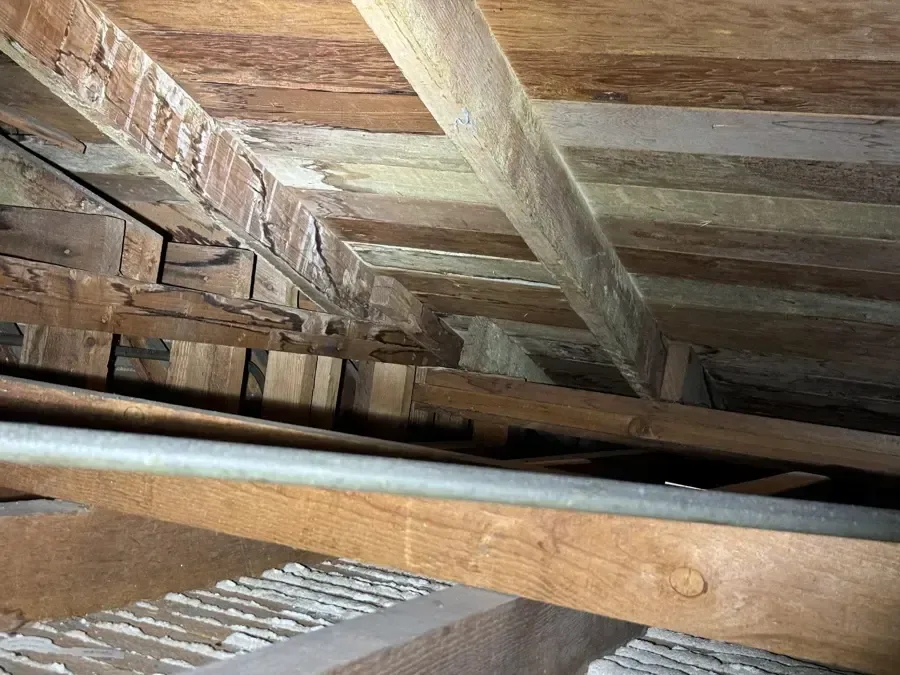
Water can move along roof framing before reaching a ceiling joint or wall cavity. A stain therefore helps locate the affected interior, but the investigation also needs the accessible space above it. Wet decking, insulation and ceiling materials each contribute to the cleanup and repair scope.
At a property near Veterans Memorial Park, attic access may influence how the damage is inspected. Stored items, narrow openings or unsafe walking surfaces can limit the initial view. Describe those conditions before anyone attempts to reach the damp area or carry equipment overhead.
- Note which interior surfaces changed during rainfall.
- Identify rooms directly below accessible attic areas.
- Keep clear of sagging ceiling sections and fixtures.
- Preserve records of temporary and permanent roof work.
Control entry before covering interior damage
A roof contractor addresses the opening that lets rain in. The cleanup work then deals with water already held in the structure. Drying a ceiling without resolving renewed entry can produce temporary improvement followed by another wet cycle, making the condition harder to assess accurately.
For a Greenway Terrace home, the practical question is which assembly actually got wet. Saturated insulation may need removal to expose framing, while sound accessible wood may be retained for monitored drying. Decisions should follow condition and access rather than treating every attic layer the same way.
Check adjoining walls as well as the ceiling
Rainwater can enter a wall cavity at the roof edge or descend beside framing. Base trim and floor edges may then show damage below an overhead stain. The moisture map should connect these levels and identify whether separate equipment positions or selective openings are needed.
A Cherry Hill property with a stable ceiling may still have wet materials above it. The visible finish and the concealed cavity need separate attention. Where ceiling layers have softened or separated, ceiling leak cleanup addresses the room below while the wider roof-related moisture path is assessed.
Keep exterior repairs and interior readings together
Record when entry protection was installed and when permanent roof work was completed. Those dates help interpret the drying trend inside the building. The closing scope should describe retained attic materials, removed insulation or finishes, and any reconstruction still needed. A repaired roof and a dry-looking ceiling are separate milestones from a documented dry interior assembly.
Roof leak water damage coverage
Interior roof leak assessments cover properties near Veterans Memorial Park, Greenway Terrace and Cherry Hill, with work access determined by the attic and affected rooms.
The same service nearby: roof leak water damage in Paramus, Oradell, Maywood.
Roof Leak Water Damage questions
Can a roof leak stain appear away from the opening?
Yes. Water can run along framing or other surfaces before dropping onto a ceiling. The investigation should follow the accessible wet route above the stain and connect it with roof findings rather than assuming vertical entry.
Does a roof patch complete the restoration?
It addresses entry control, while the interior may still hold moisture. Insulation, wood and ceiling layers need assessment after the leak stops. The drying scope should remain separate from the exterior repair description and its completion record.
Should attic insulation be moved by the homeowner?
Wet insulation can hide unstable surfaces and complicate safe movement. Leave disturbance until access and the affected assembly are assessed. The cleanup plan should explain which material needs removal and how the room below will be protected.
Can ceiling staining be treated as cosmetic?
Only after source and moisture conditions are resolved. A mark can remain after drying, but fresh or changing discoloration may accompany wet concealed layers. Readings and inspection help distinguish repairable finish damage from an assembly needing further treatment.
What if another rainfall occurs during cleanup?
Entry protection and roof repair coordination become especially important. Record any new interior changes and notify the responsible trades. Renewed wetting can alter drying measurements and may require adjustments to the affected area or equipment arrangement.
What records support the final repair decision?
Useful records include roof correction details, photographs of exposed layers, material readings and notes about removals. Together they describe the interior condition and help define insulation, ceiling and finish replacement after the water damage work.
Restore the layers beneath the roof
Controlled entry and measured interior drying prepare affected attic and ceiling materials for a clear repair handoff.