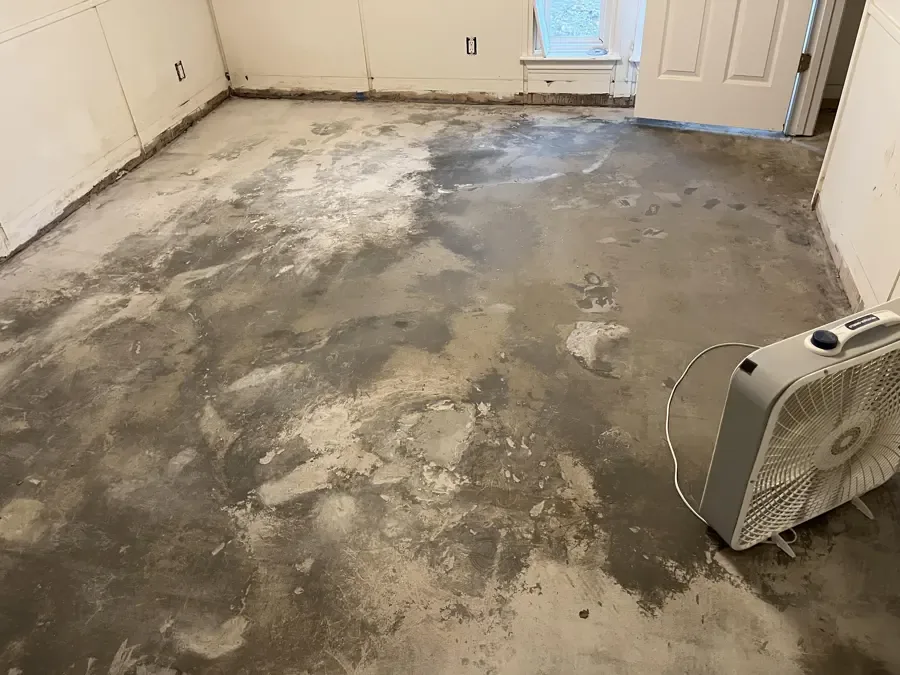
Slab Leak Cleanup in River Edge
Persistent dampness above concrete deserves a source investigation before flooring is disturbed. River Edge slab leak cleanup identifies the actual floor assembly, traces the water and plans access around the affected layers.
(888) 471-9821Describe the damp floor patternHow slab leak water damage is handled in River Edge
Cleanup for a suspected slab leak connects plumbing diagnosis with the condition of the flooring above it. Concrete, adhesives, underlayment and wall edges each need assessment before removal boundaries or drying equipment are chosen.
First steps for slab leak water damage
- 1
Describe the pattern over time
Note whether dampness spreads, returns after wiping or changes when plumbing is used. These observations help focus source testing without requiring anyone to disturb the floor first.
- 2
Avoid covering the wet area
Rugs and temporary coverings can hide changes and restrict evaporation. Keep the affected surface visible where safe, and protect the room from unnecessary traffic over softened flooring.
- 3
Keep source work identifiable
Record any plumbing diagnosis or repair already completed. The cleanup assessment needs to know whether water entry has stopped before interpreting changes in the moisture readings.
- 4
Prepare access around fixed objects
Mention cabinets, furniture and floor transitions that limit inspection. Their locations help define practical access to wet layers and the route for moving removed materials out.
What does slab leak water damage cost in River Edge, NJ?
River Edge slab leak restoration planning spans $1,500 to $3,000 for a limited floor area, $3,000 to $5,800 for several wet layers, and $5,800 to $8,500+ for broad concealed spread. Plumbing access and finish repairs need clear scope descriptions.
Limited floor area
- Defined damp section
- Accessible finish edges
- Focused slab measurements
Several wet layers
- Covering removal decisions
- Underlayer condition checks
- Connected edge drying
Broad concealed spread
- Extensive floor access
- Multiple material assemblies
- Longer moisture tracking
Compare the scope with the water damage cost calculator. The restoration company prices the inspected damage, material access and equipment needs separately from source repairs, replacement finishes and contents work.
The slab leak water damage process
- 1
Identify the source and floor construction
Inspection combines the visible moisture pattern with information about the plumbing investigation. The floor covering, underlayment and concrete interface are identified so the restoration plan addresses the assembly present in the room rather than an assumed construction type.
- 2
Set useful opening and removal boundaries
Damaged finishes and concealed wet layers are evaluated for access. The proposed work distinguishes openings needed for source repair from removal needed for cleaning and drying, helping explain the different parts of the affected floor scope.
- 3
Manage moisture leaving the retained assembly
Drying equipment supports evaporation and removes released moisture from the room. Measurements at relevant material locations track progress, while persistent wet areas prompt another check of source control, trapped layers and the adequacy of the available access.
- 4
Prepare a documented transition to floor repair
The closing record identifies retained materials and the moisture condition reached during restoration. Replacement flooring decisions then account for the selected product and installation requirements, with unresolved finish damage kept visible in the repair scope rather than hidden by a new covering.
A floor that stays damp can make the source seem obvious when it is still concealed. Slab leak damage work in River Edge starts by identifying the plumbing condition and the materials between the room and the concrete. That information determines where access is useful and which surfaces actually need drying.
Build the diagnosis before opening the floor
Moisture appearing at a seam might come from plumbing beneath the slab, water moving from an adjacent room or another entry route. Source testing and the pattern of material readings help separate those possibilities. Cleanup should follow the identified release instead of treating every damp concrete surface alike.
For a home near Continental Avenue, the assessment needs the same practical details as any other property: where dampness first appeared, whether it changes with water use and which finish layers are present. Furniture and fixed cabinets may limit access to the wettest portion of the assembly.
- Record the visible shape of damp flooring.
- Identify coverings, backing and any accessible underlayers.
- Coordinate source location with the plumbing repair work.
- Compare nearby dry areas before setting removal boundaries.
Use selective access to reveal trapped moisture
A covering can hold moisture against concrete while its exposed face looks nearly normal. Adhesive changes, lifted seams and softened backing help indicate where closer inspection is needed. Removal should expose damaged or inaccessible layers while retaining sound material wherever the condition and drying approach support it.
At a property near Brookside Park, temporary room use may depend on whether a safe walking path can remain around the opened floor. The cleanup plan should identify those boundaries, protect dry furnishings and separate any plumbing access opening from the wider area needing moisture treatment.
Let measurements govern the next floor covering
Concrete can release moisture gradually after the source stops. The affected concrete needs material moisture assessment before another covering is installed. Drying records should track the affected assembly and connect the restoration endpoint with the requirements of the proposed replacement material.
A Grand Avenue property with damp wall bottoms may need more than floor treatment. Moisture can extend into trim and partition materials at the slab edge. The scope should include those connected surfaces and coordinate structural drying where retained assemblies remain wet.
Clarify what the estimate includes beneath the finish
The plumbing opening, damaged covering removal and drying area may have different boundaries. Ask for those tasks to be described separately. A useful scope explains the visible damage, the source repair coordination and the measurements required before replacement flooring proceeds. That distinction keeps an exposed slab from being mistaken for a completed restoration simply because the surface is accessible.
Slab leak water damage coverage
Properties near Continental Avenue, Brookside Park and Grand Avenue can arrange assessment of damp floor assemblies, with access planned around the room and finish conditions.
The same service nearby: slab leak water damage in Paramus, Oradell, Maywood.
Slab Leak Water Damage questions
Does damp concrete always mean a buried pipe leak?
No. The source needs to be located. Water can reach a floor assembly through several routes, so the pattern of dampness, plumbing findings and surrounding material readings should be considered together before a repair opening is planned.
Must all flooring in the room be removed?
Removal depends on damage, moisture access and the covering's condition. A localized opening may be useful in some assemblies, while trapped moisture or deteriorated backing may require broader access. The proposed boundary should have a specific purpose.
Can the floor be dried while the source remains active?
Continued entry can replace the moisture being removed and obscure the drying trend. Source control should be coordinated with restoration. The records need to show when the leak stopped so later measurements reflect the remaining building moisture.
Why check walls during a slab-related cleanup?
Water held at floor level may contact trim, wallboard and partition edges. Those materials can remain wet even after the exposed concrete improves. Their condition helps determine whether the drying area needs to extend beyond the floor.
Is dry-looking concrete ready for new flooring?
Appearance alone is insufficient. The replacement covering and adhesive have installation requirements, and the affected assembly needs appropriate moisture assessment. The restoration handoff should provide useful measurements rather than relying on the absence of visible dark patches.
Are plumbing excavation and restoration the same charge?
They are distinct tasks that should be described in the estimate. Source location, plumbing access, water damage removal, drying and finish replacement can involve different work areas. Clear scope descriptions make those responsibilities easier to understand.
Give the floor a measured repair path
Source control and assembly readings help determine useful access and the next steps before a replacement covering conceals the concrete.